





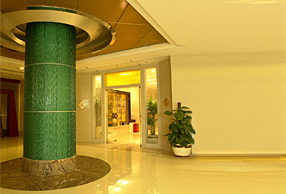






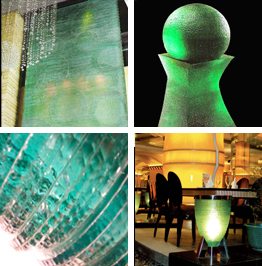

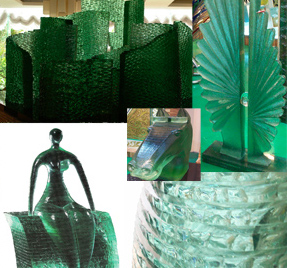



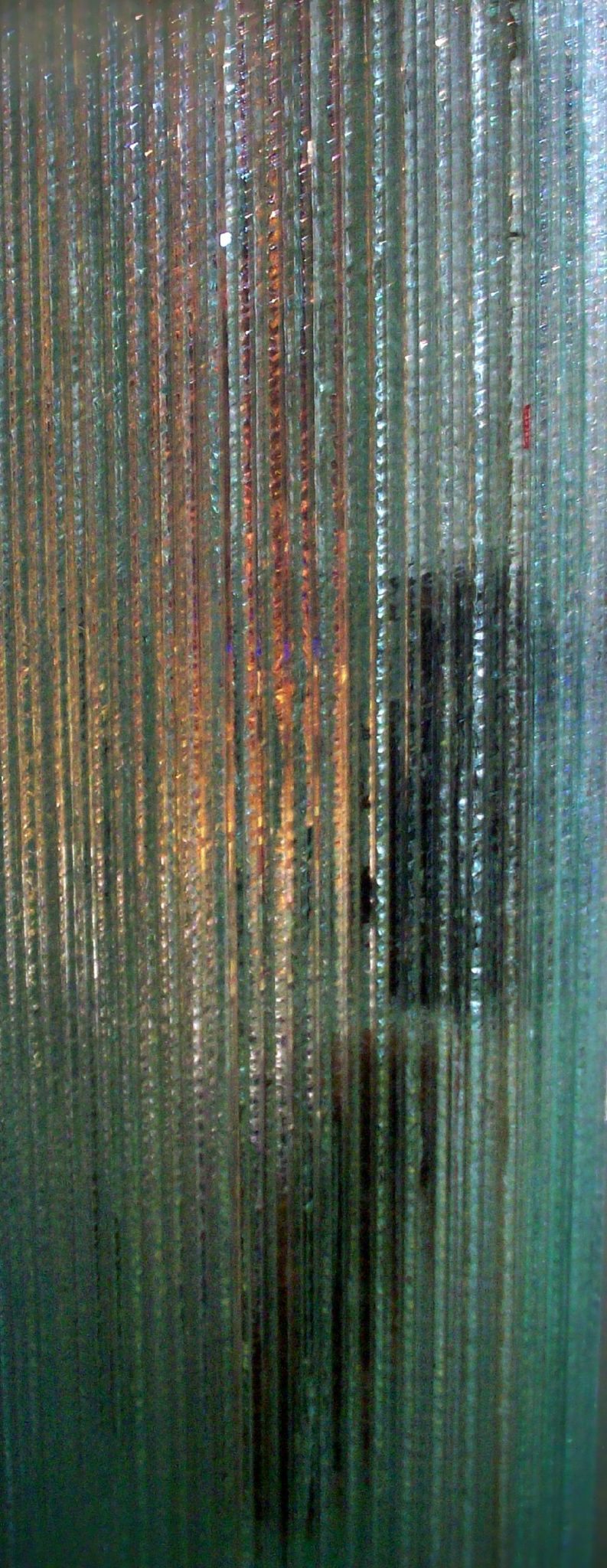

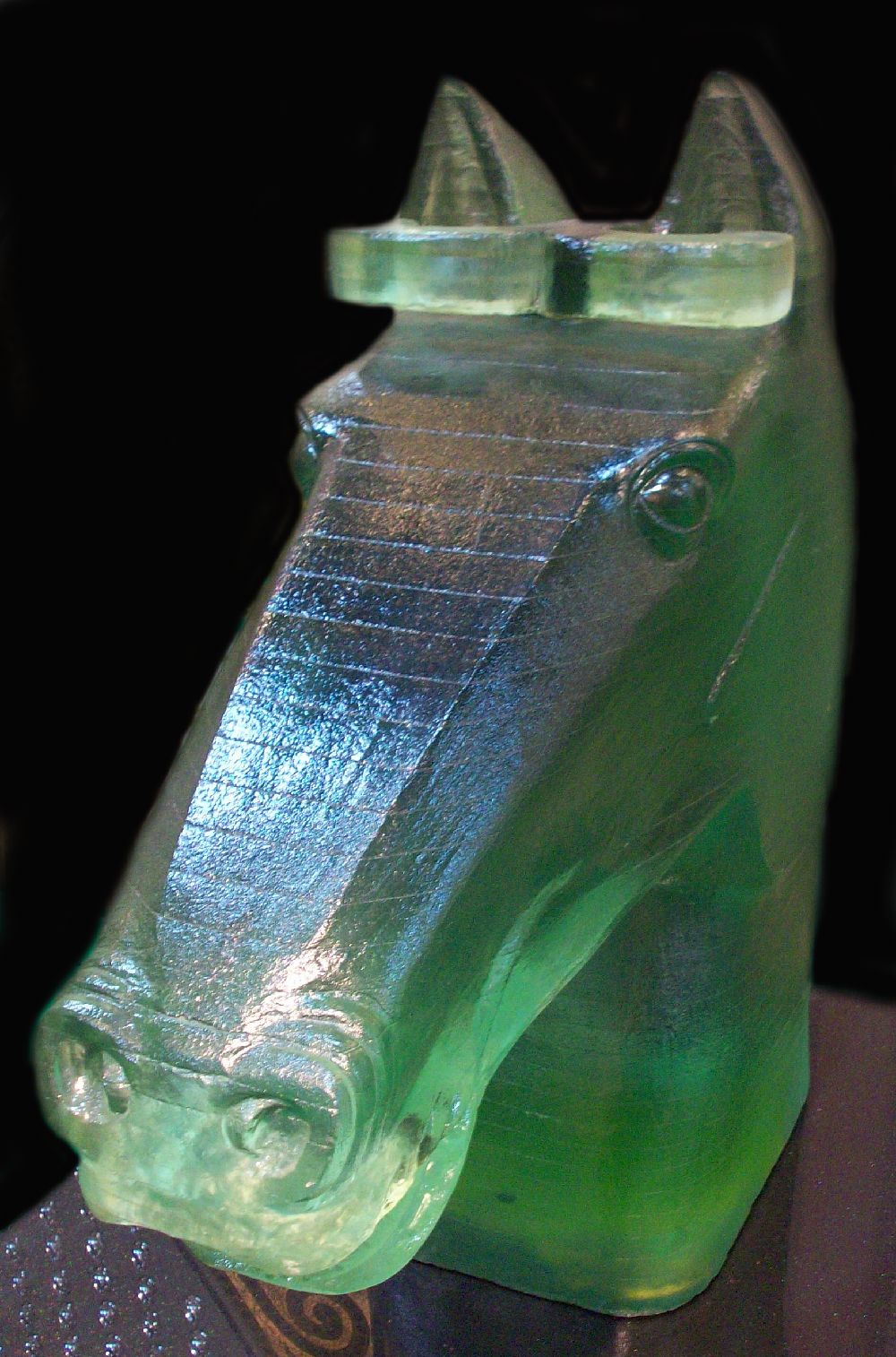
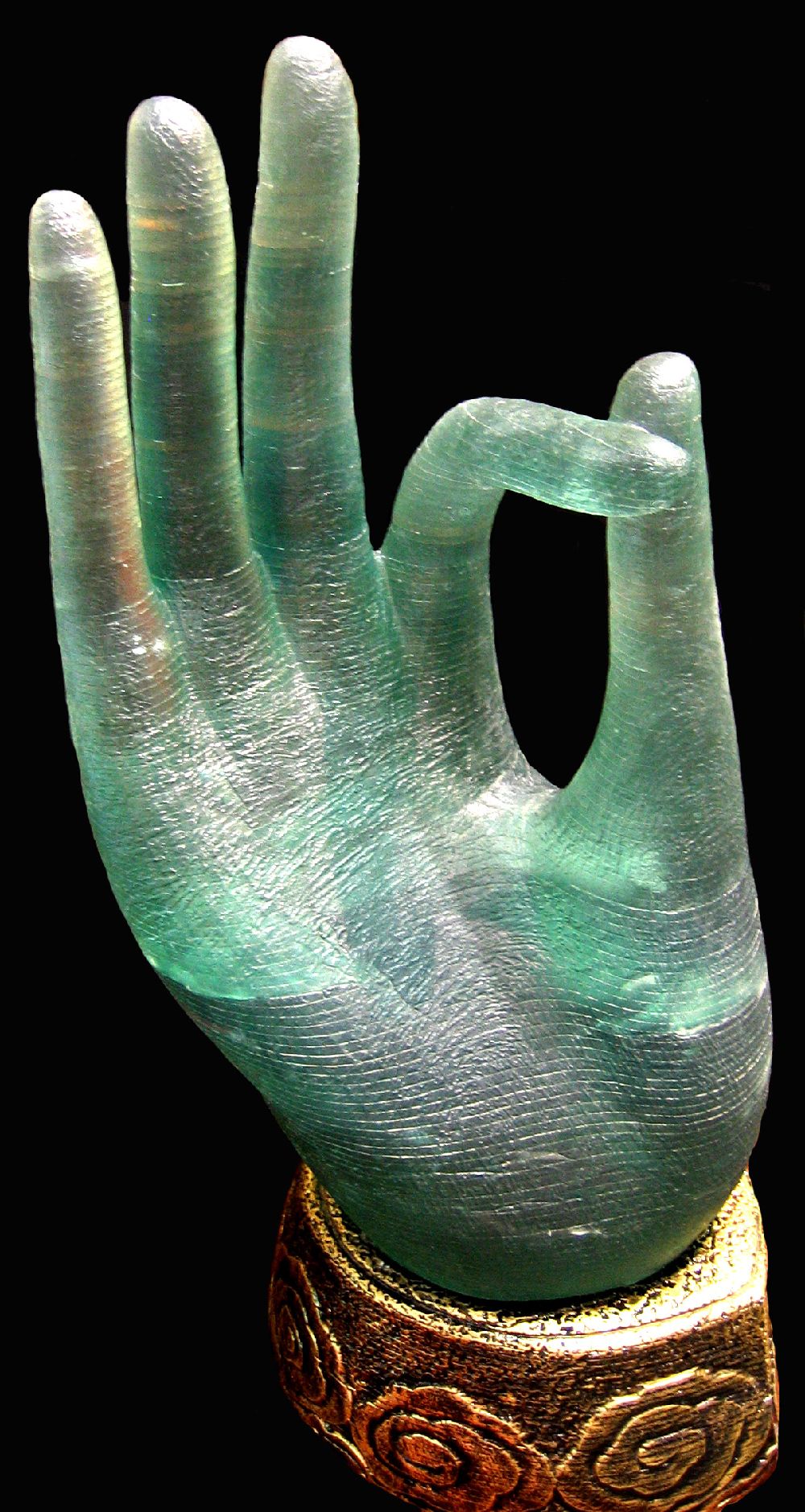
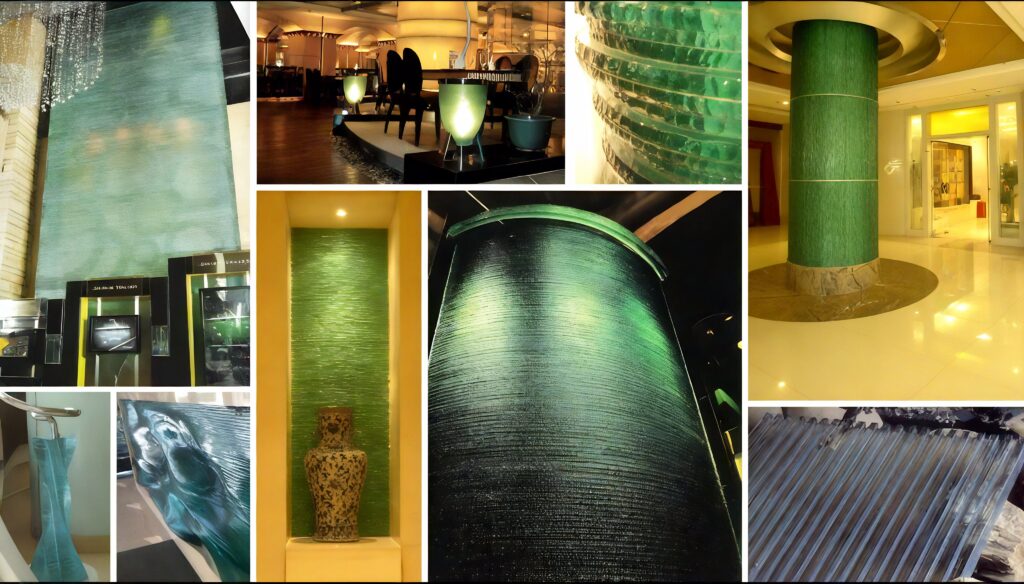
At Palace of Glass, we transform functional spaces into breathtaking experiences through the mastery of stacked glass. As a premier custom production house, we specialize in creating monumental structural glass features that serve as centerpieces for ultra-modern hotels, high-end residences, and corporate lobbies.
Why Choose Palace of Glass for Your Project?
We don’t just fabricate glass; we facilitate your entire creative journey. From the initial concept to the final installation, our team is dedicated to bringing your unique vision to life with precision and expertise.
- End-to-End Project Facilitation: Our design team works with you at every step, providing technical consultations, feasibility studies, and detailed renderings to help ensure your project is executed flawlessly.
- Infinite Customization: Every feature is built to order. Whether you require specific heights, integrated lighting channels, or specialized color gradients, we can accommodate your architectural requirements.
- Architectural Safety & Durability: Our stacked glass structures are engineered for stability and longevity, with careful consideration given to the requirements of commercial and residential installations.

The Art of the Monolith: How It’s Made
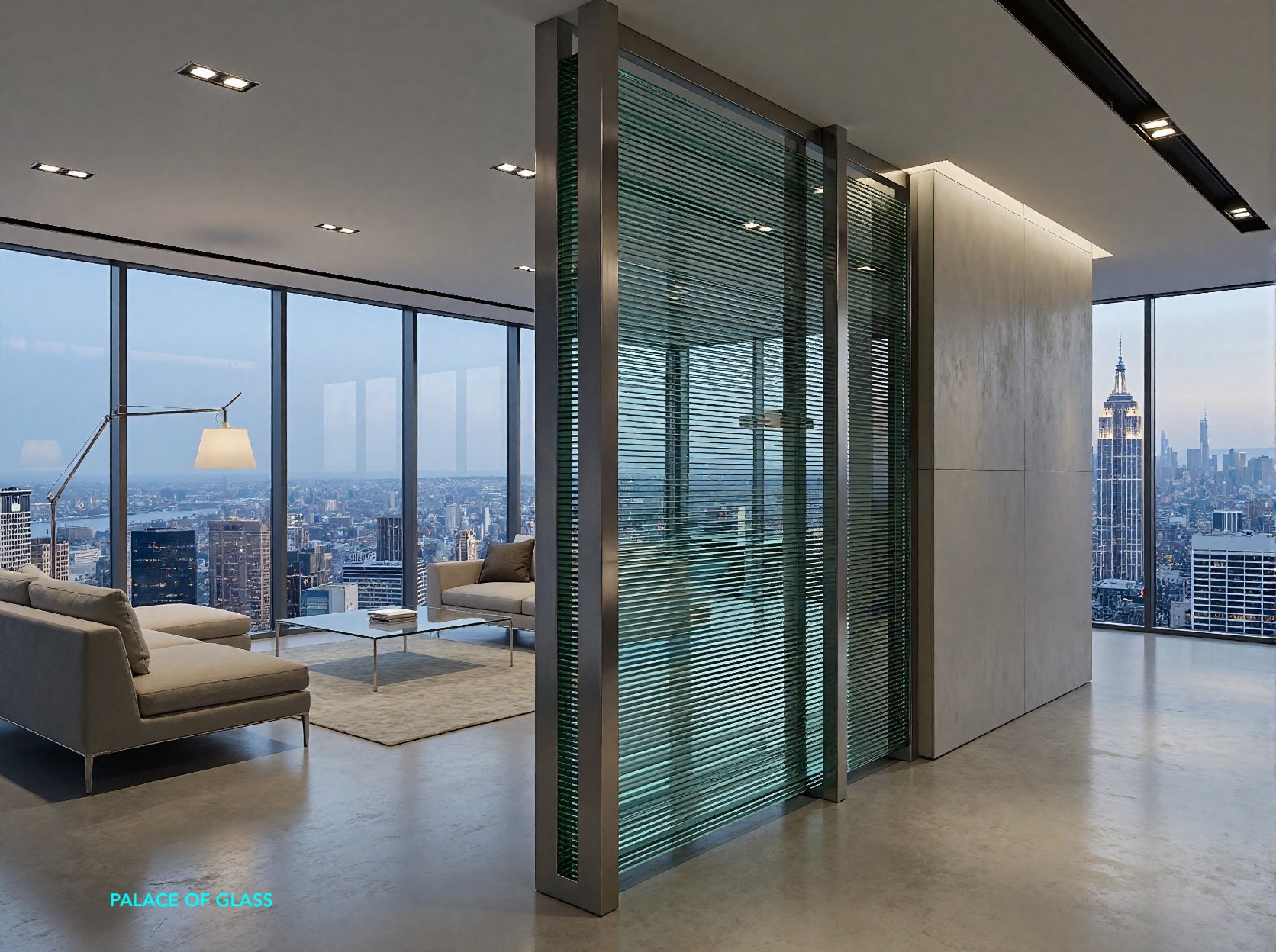
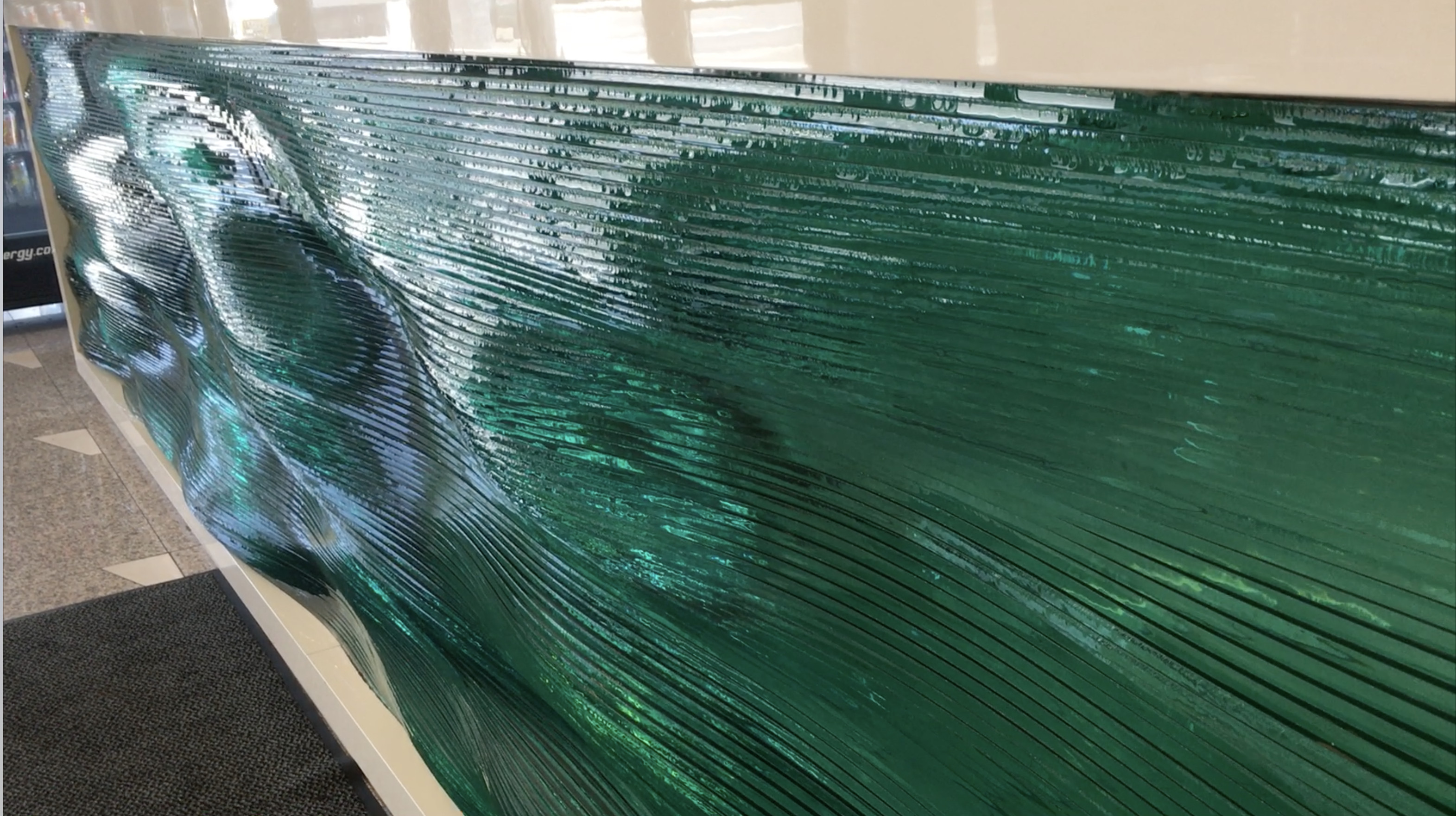
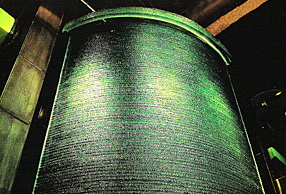
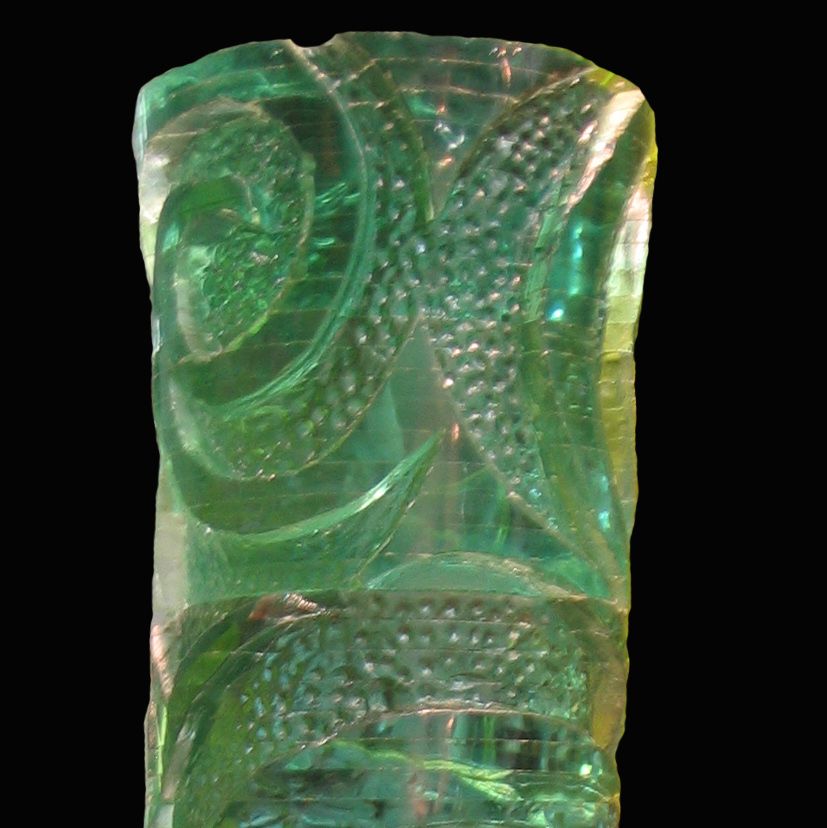
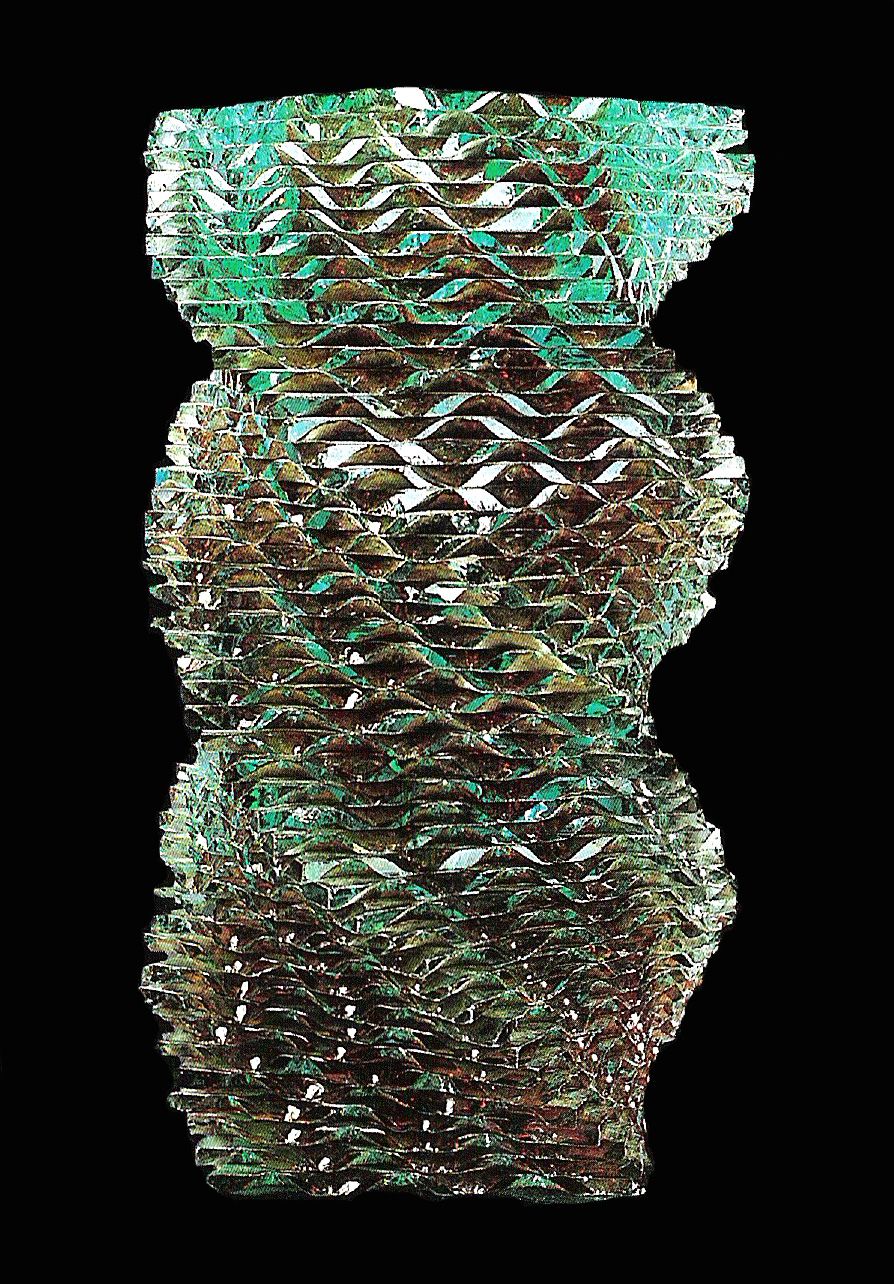
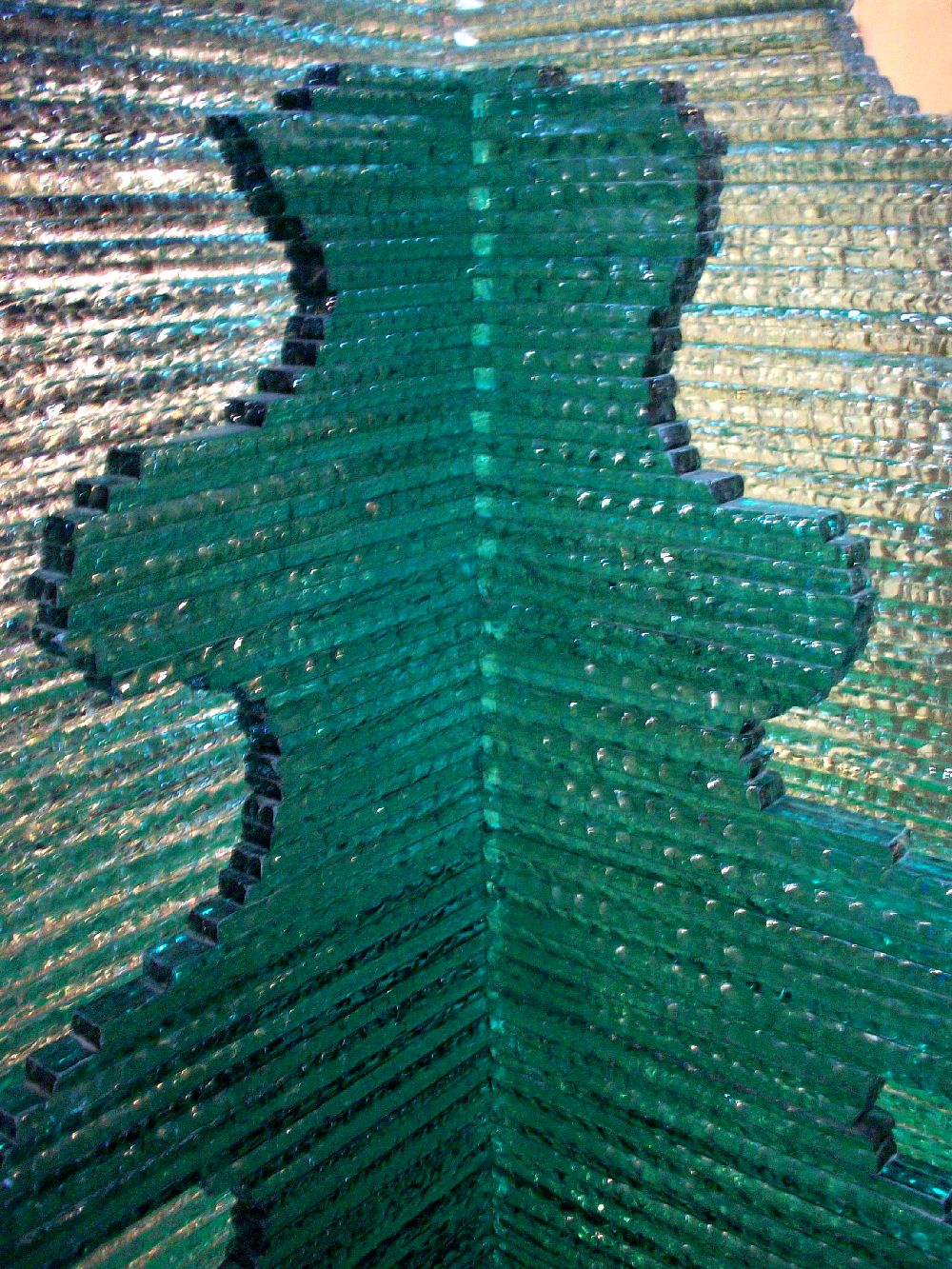
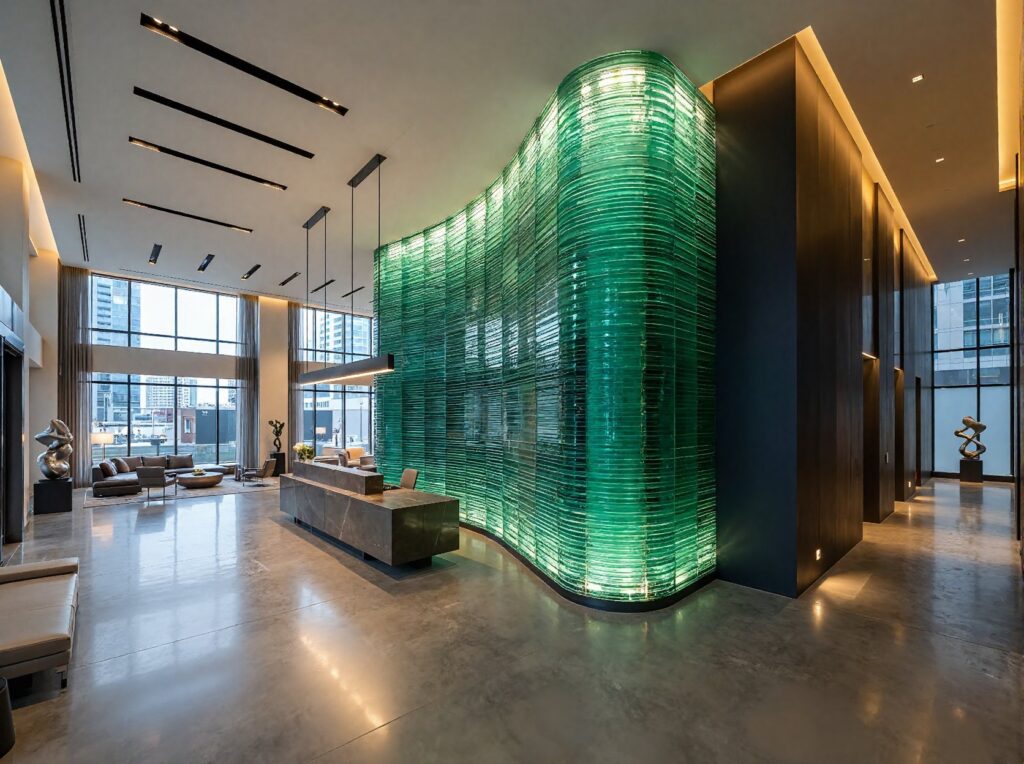
Stacked glass is an extraordinary medium created through a labor-intensive process of bonding hundreds of individual layers of high-quality glass. The result is a monolithic structure—a solid, heavy mass with a visual weight and presence similar to natural stone, yet one that remains luminous.
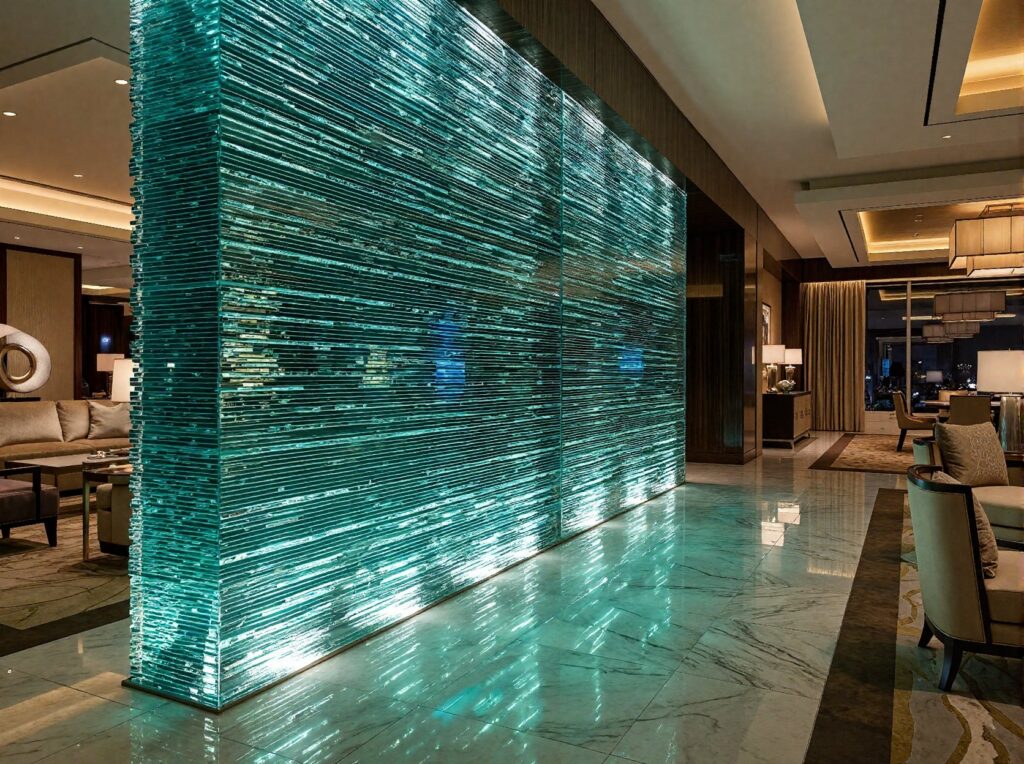
- Layered Brilliance: By bonding horizontal layers of glass, we create a solid structure that captures and refracts light in ways traditional glass panels cannot.
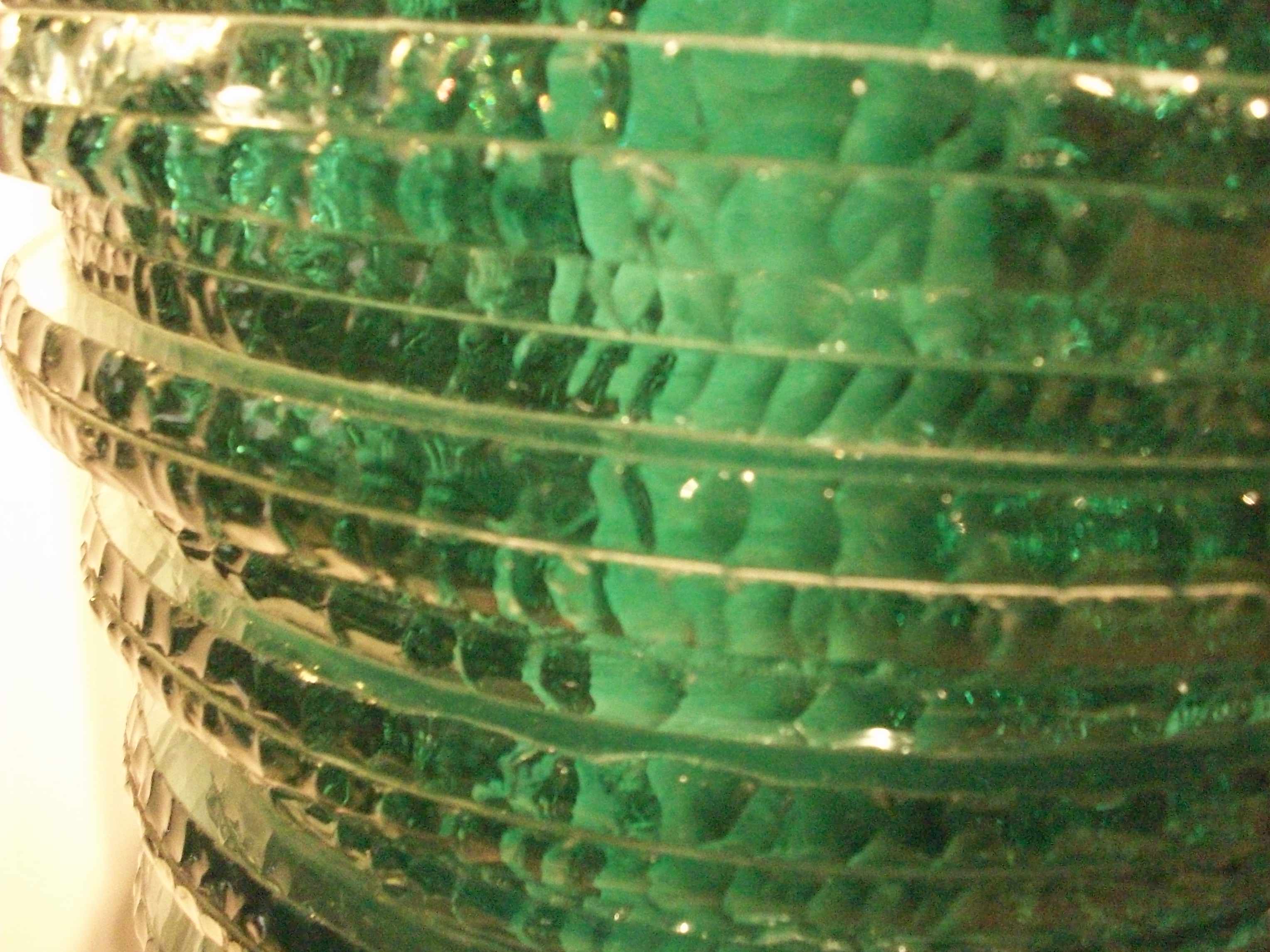
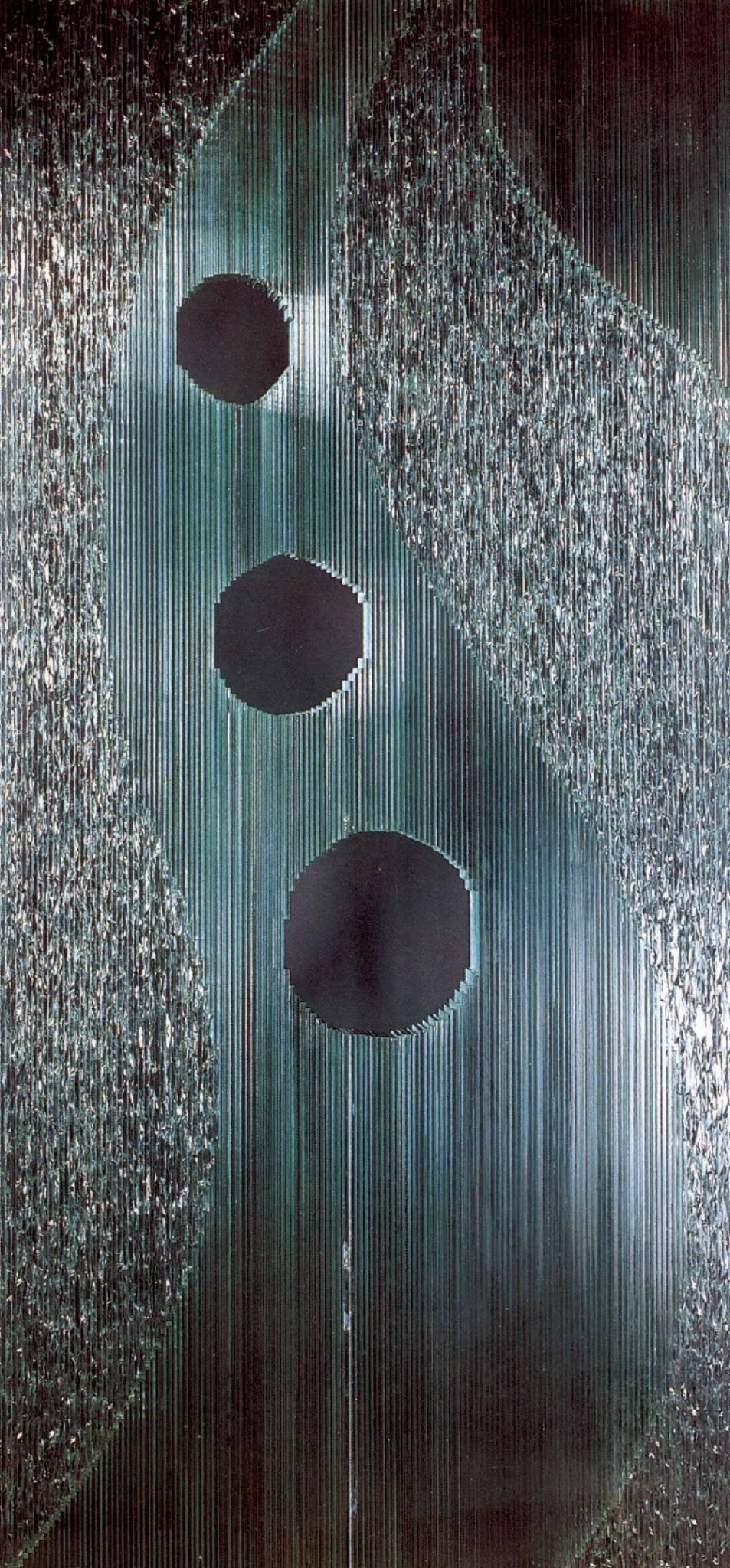
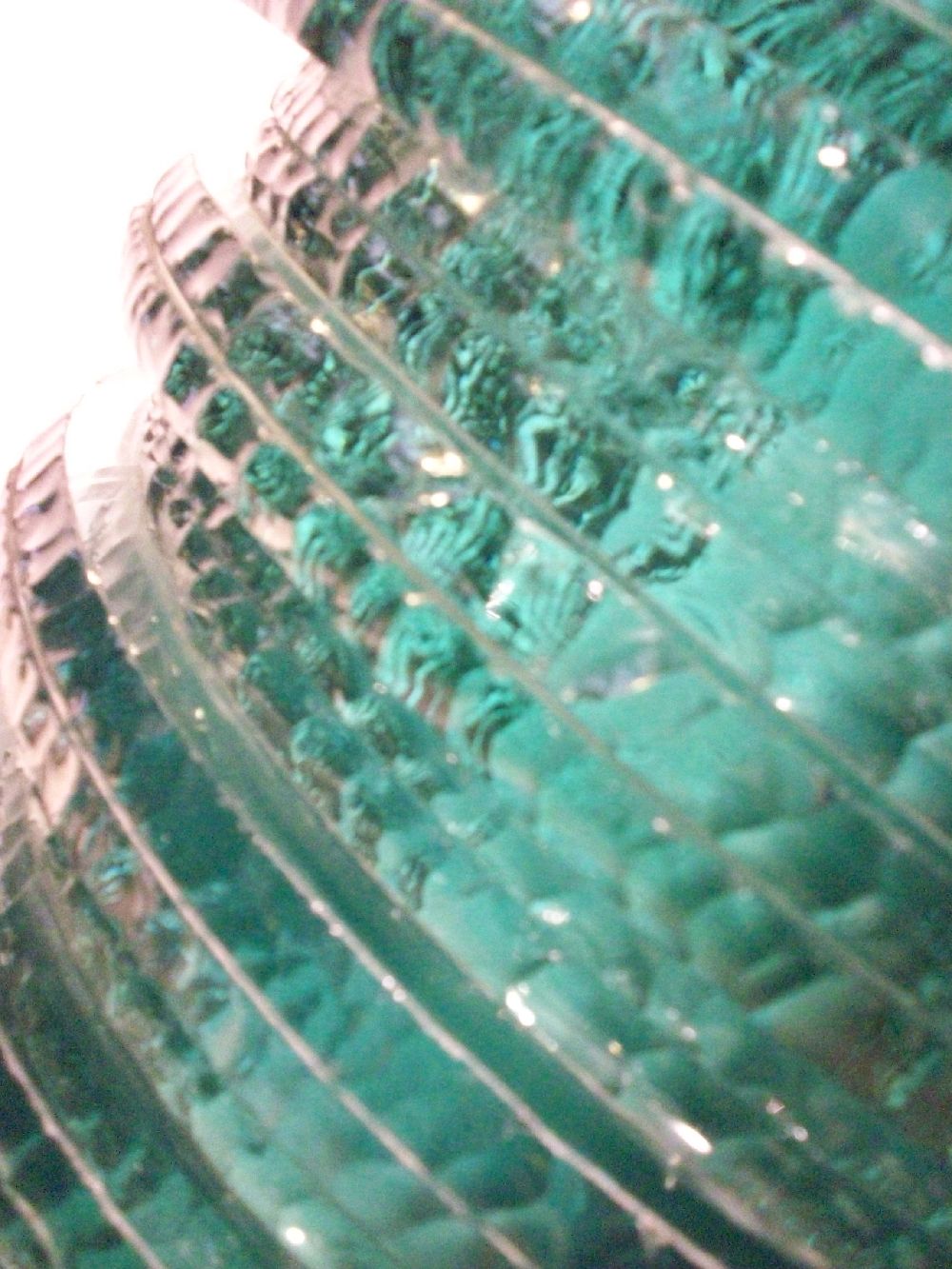
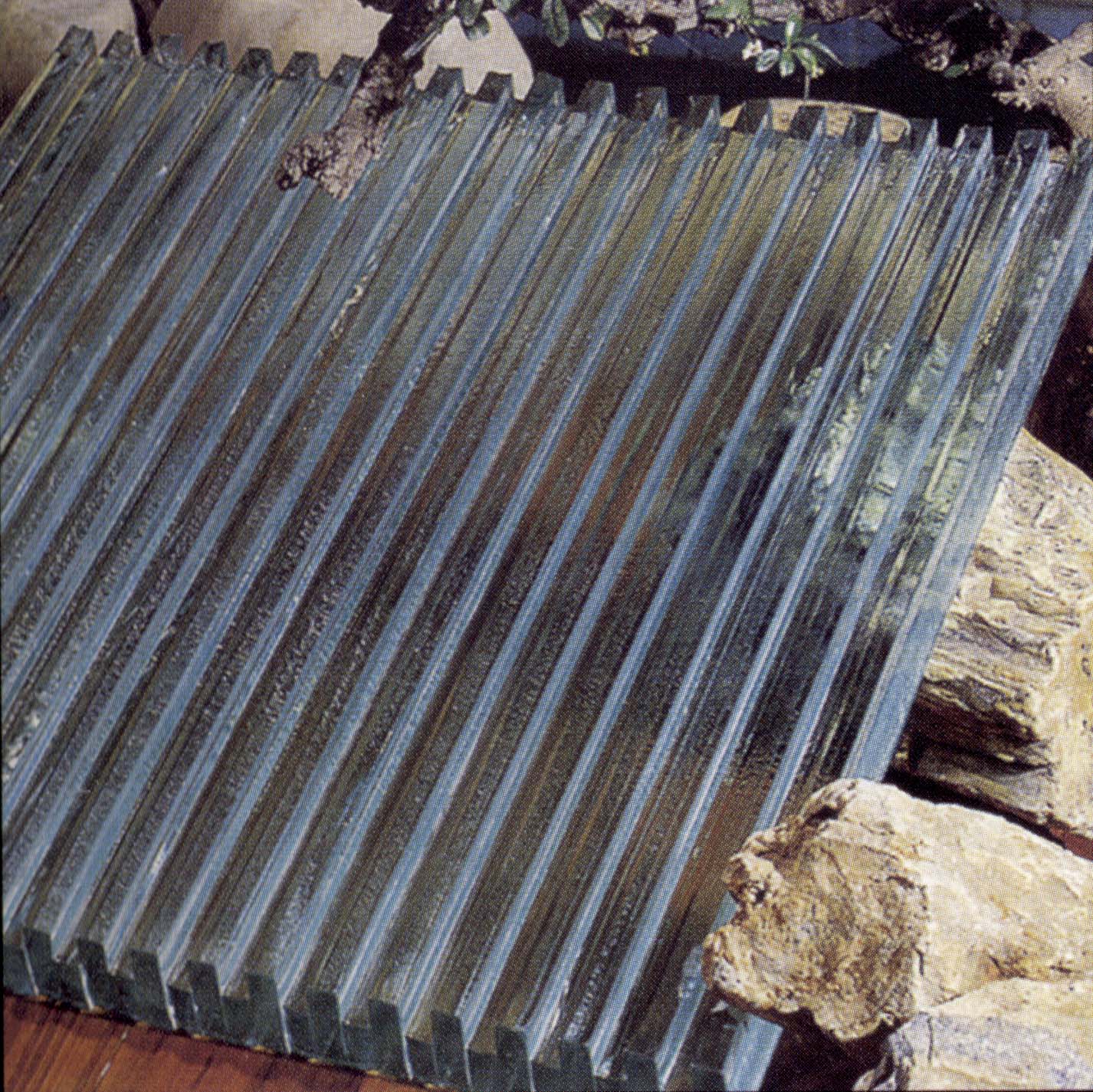
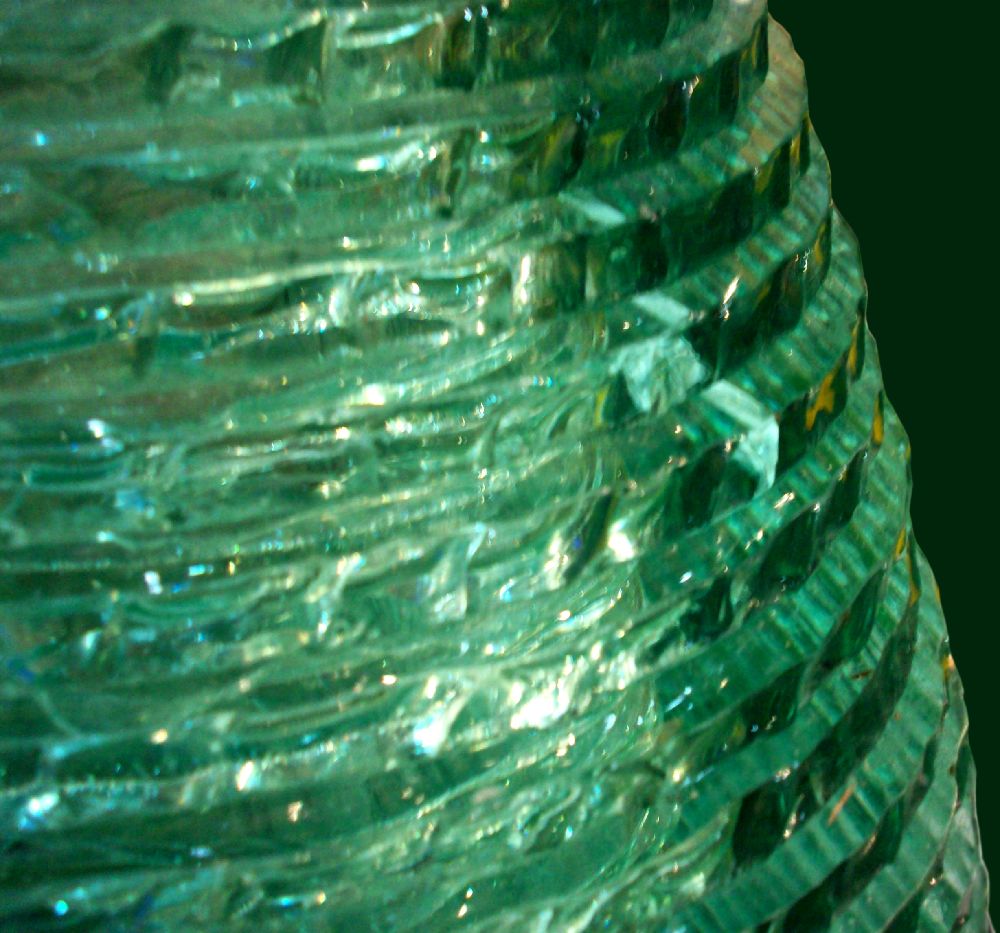
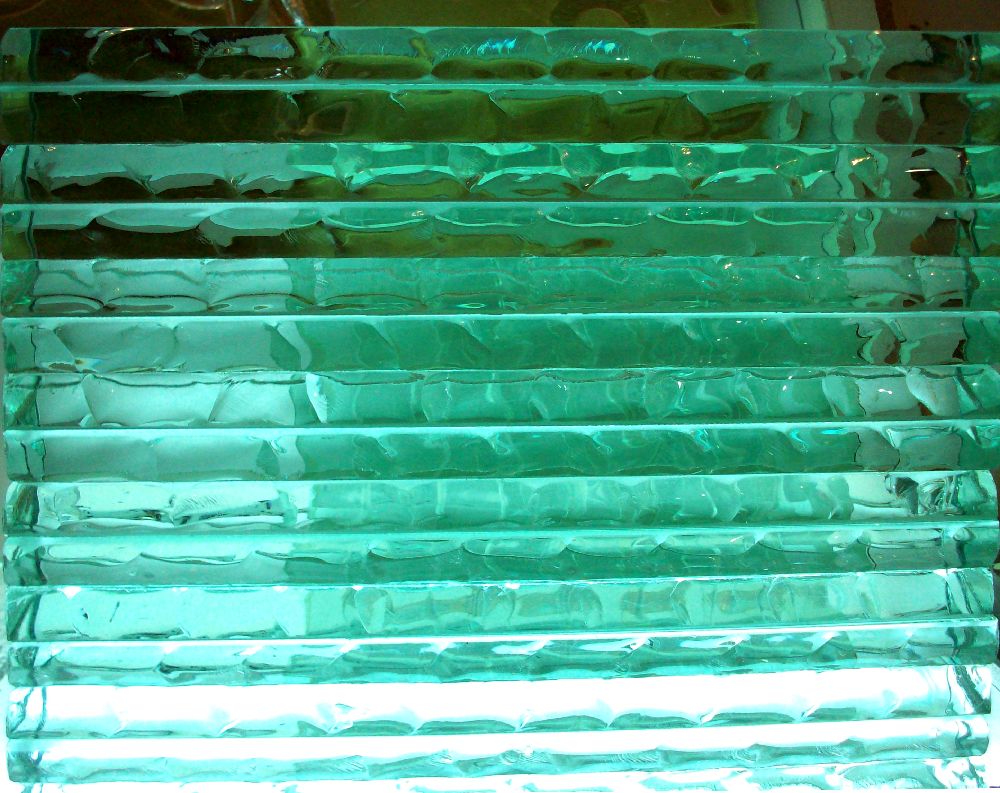
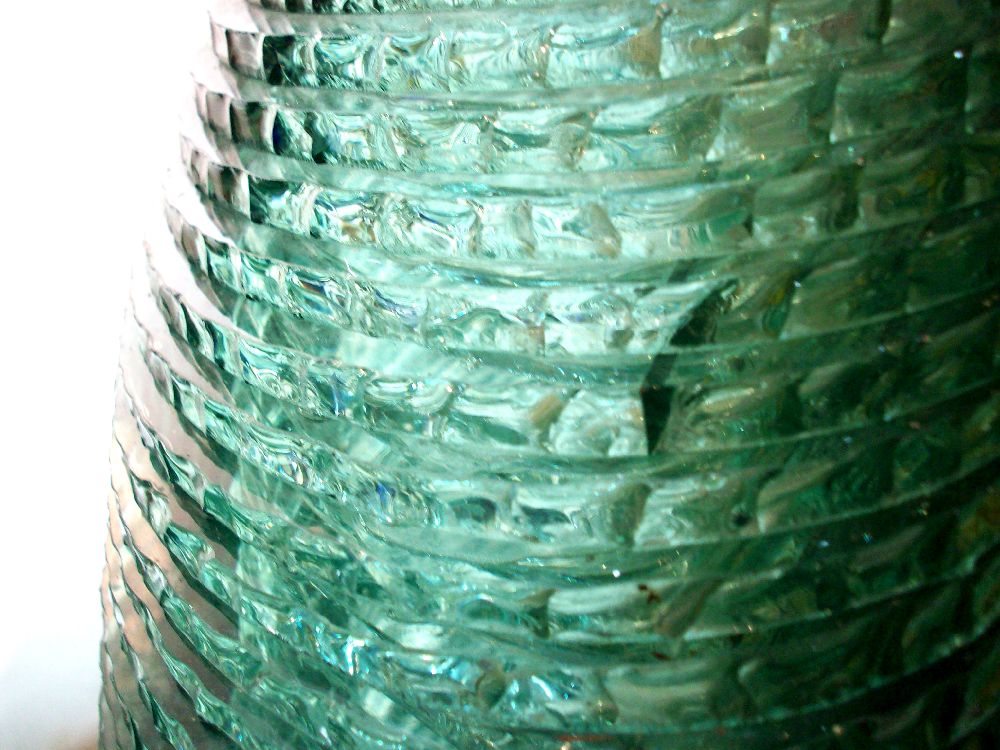
- Dynamic Edge Textures: We offer various ways to shape the visual “skin” of the glass. Choose from a rugged, hand-chipped finish for an organic, stone-like appearance or a diamond-polished edge for a sleek, contemporary look.
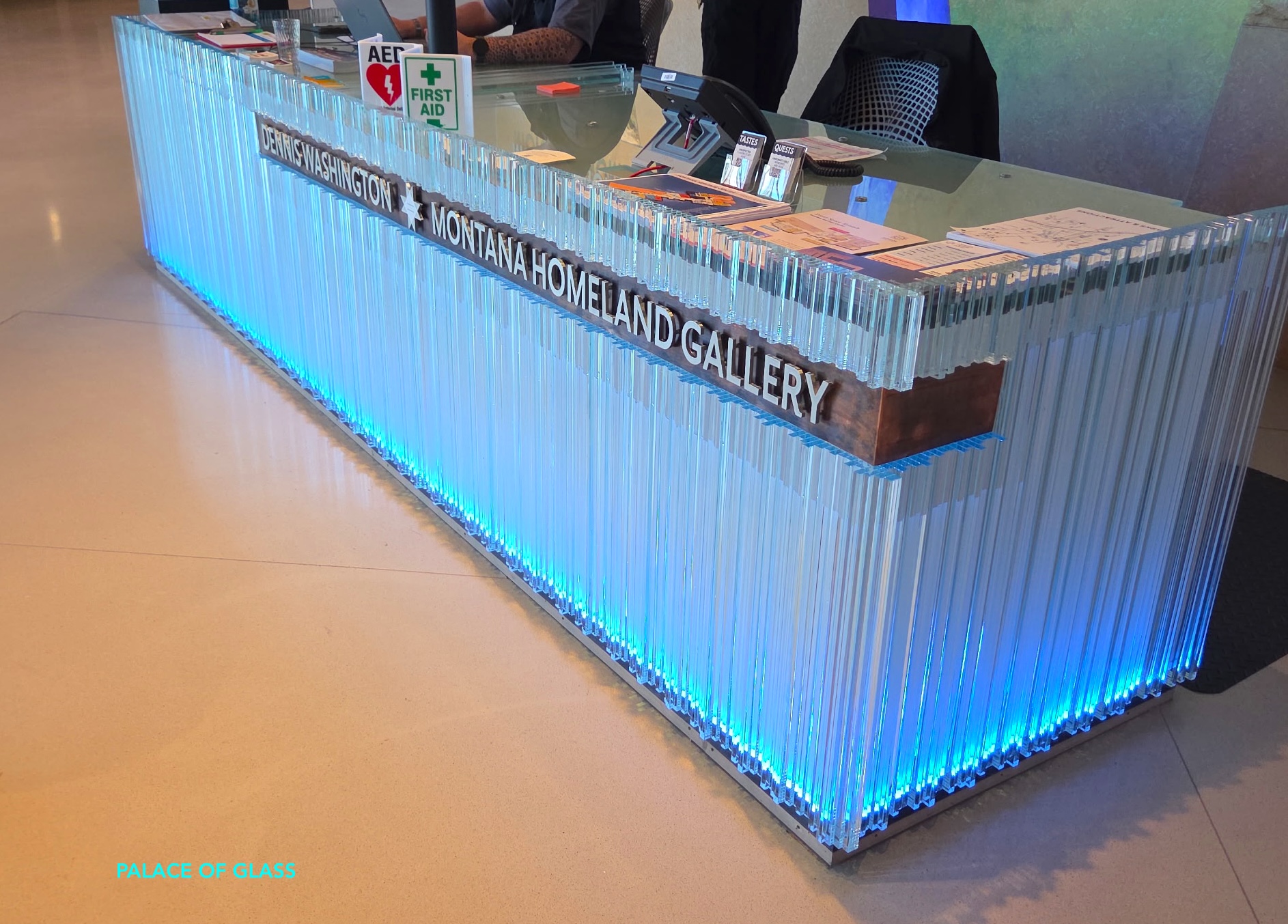
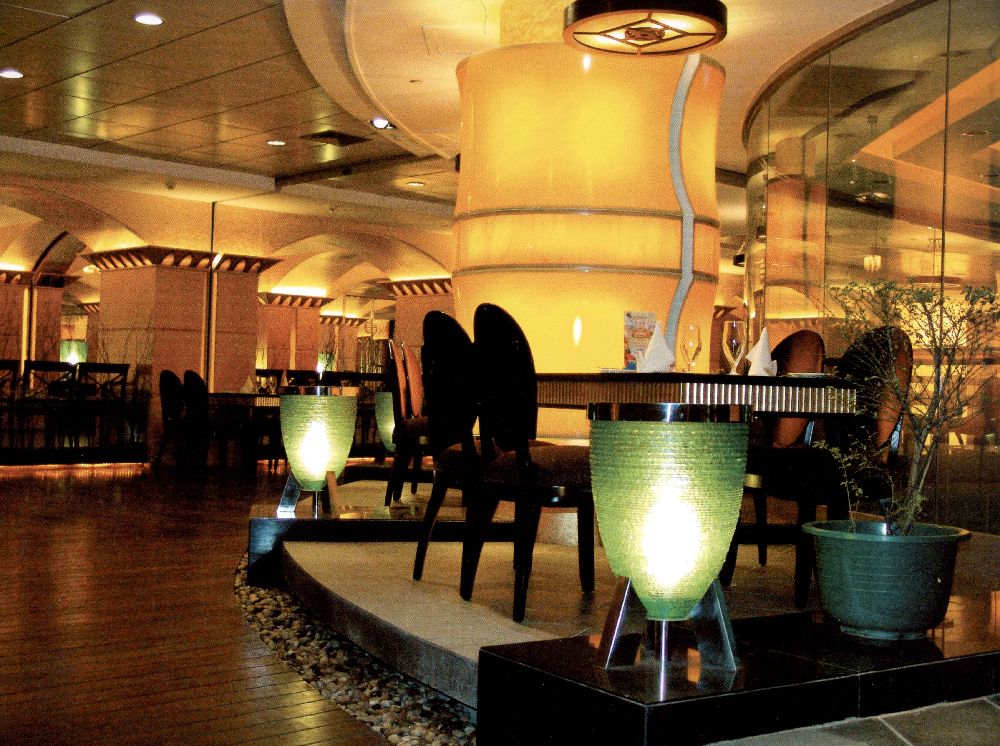
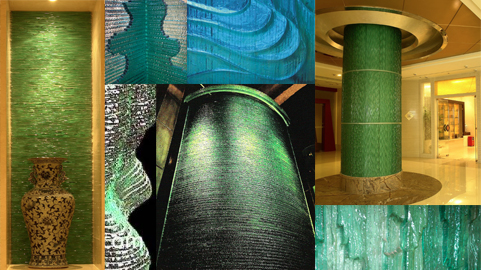
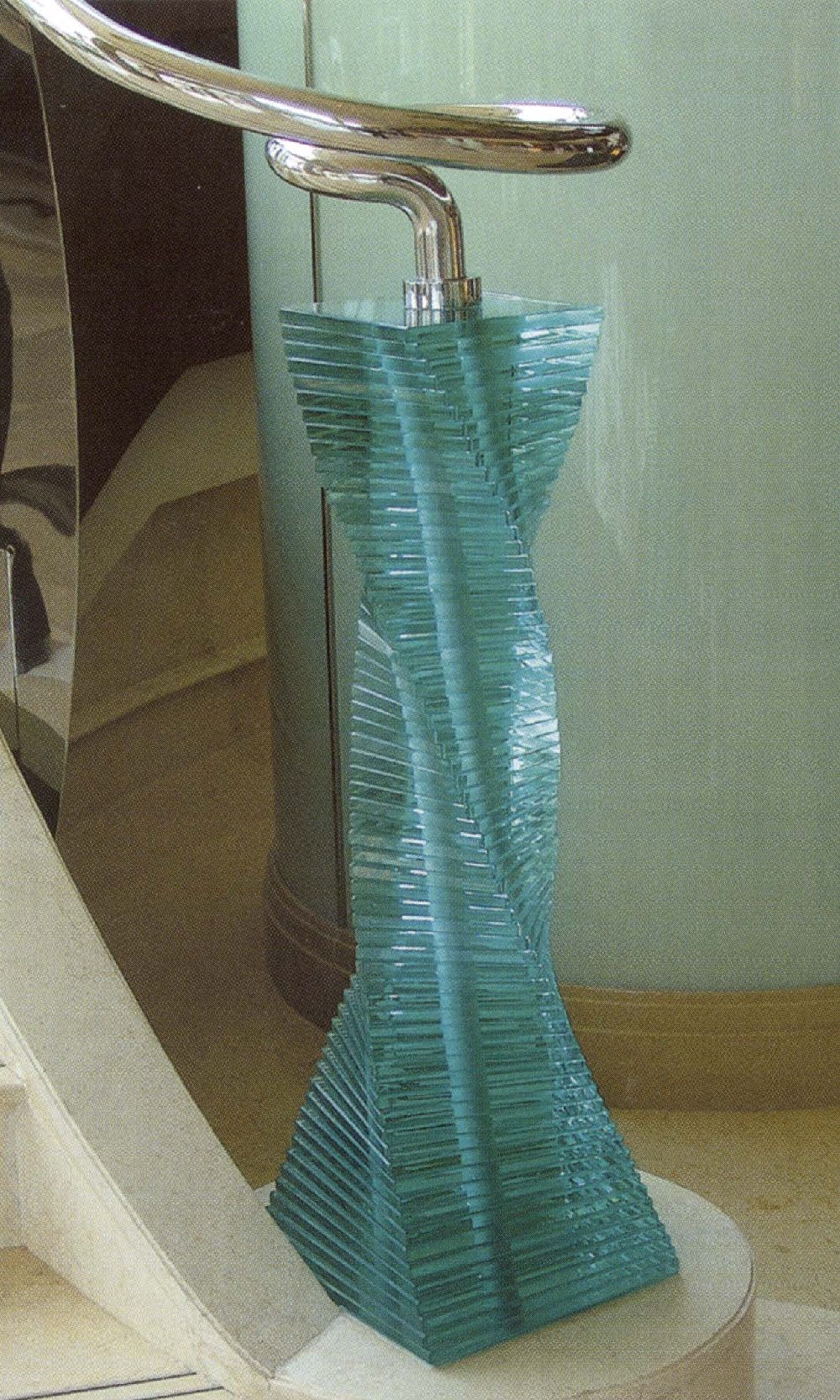
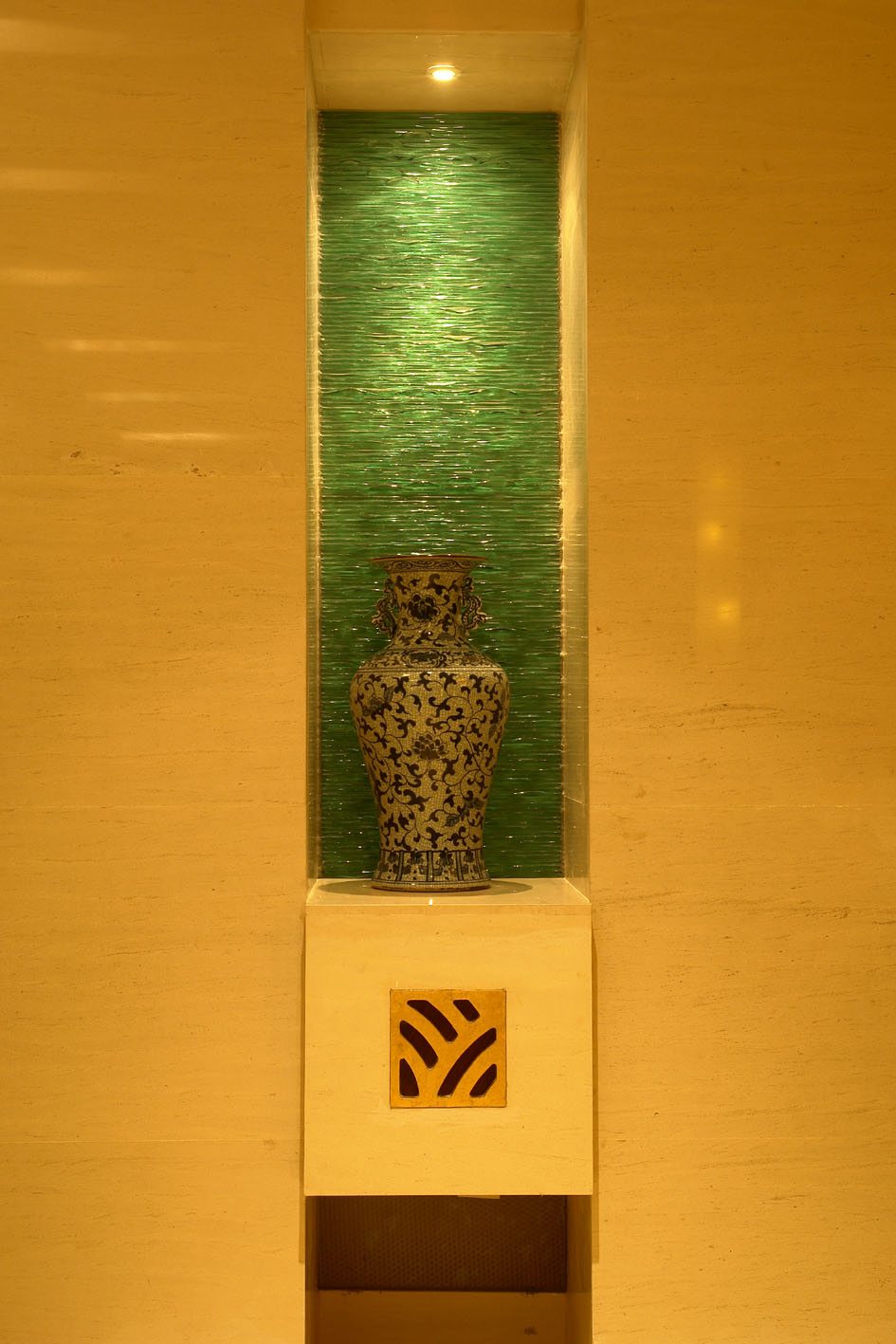
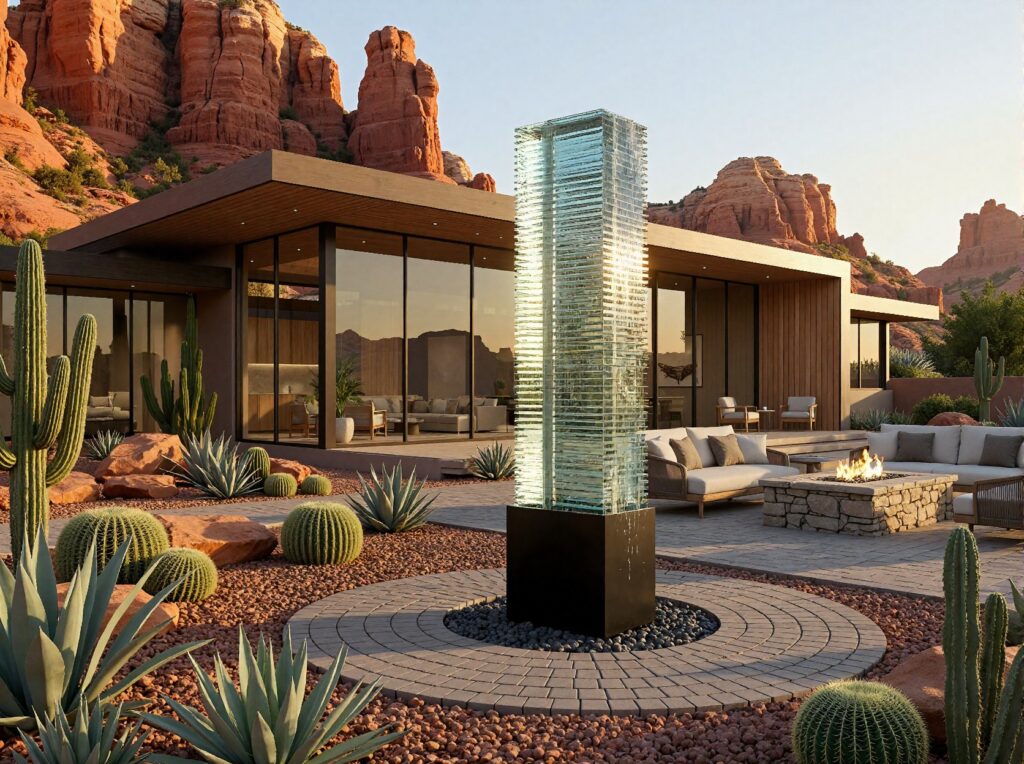
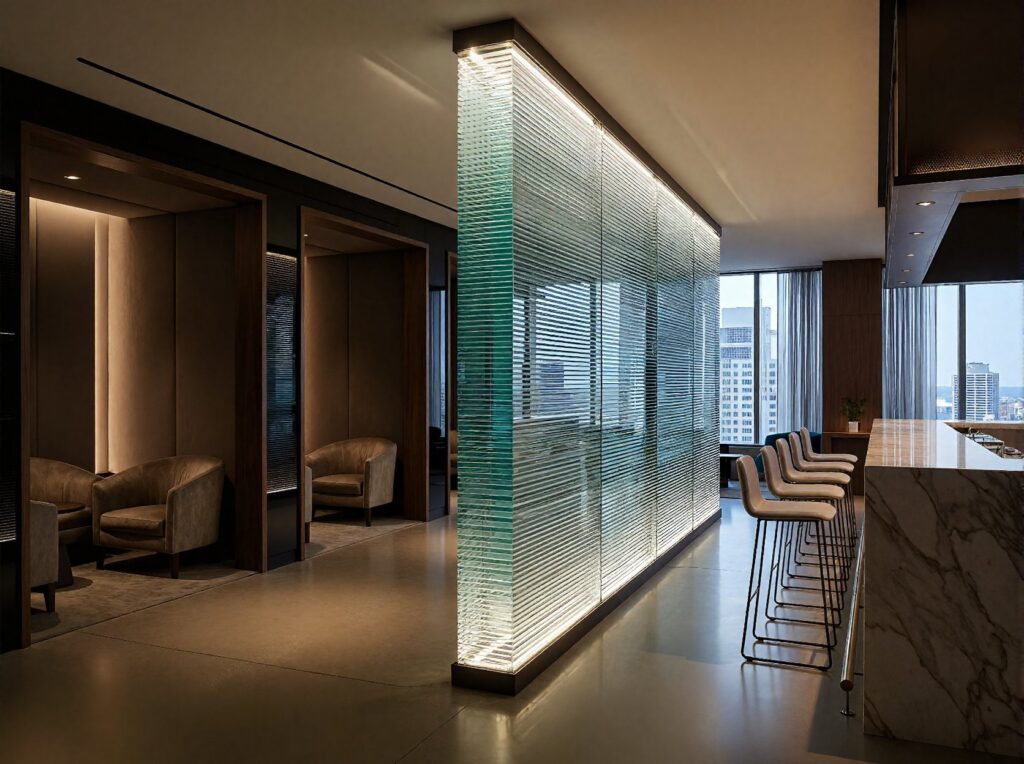
- Structural Versatility: Our production capabilities allow us to create freestanding partitions, integrated wall sections framed in metal or stone, and sculptural focal points such as illuminated pedestals and reception desks.
Elevate Your Environment Today
Stacked glass is more than a partition; it is an investment in architectural excellence. Its ability to glow from within, combined with its sheer physical presence, makes it an exceptional choice for contemporary architects and designers seeking to push the boundaries of interior design.
Ready to start your project? Contact Palace of Glass today to book a design consultation and discover how our stacked glass production can transform your space.
Stacked Glass: Benefits and Advantages
The fabrication of stacked glass is a meticulous process that transforms individual layers into a singular, monolithic architectural feature.
While the weight of the glass layers provides initial stability, structural integrity is achieved through specialized bonding techniques or, in certain configurations, reinforced metal rods. During assembly, a high-clarity specialty adhesive is applied evenly between the layers. The adhesive remains workable for a short period, allowing skilled craftsmen to make fine adjustments to each strip before the bond is finalized.
Once the layers are precisely positioned, the adhesive is cured using a concentrated UV light source, creating a permanent bond. During this critical phase, excess adhesive is carefully removed to achieve a clean, seamless finish. Once the curing process is complete, the individual layers form a unified structure.
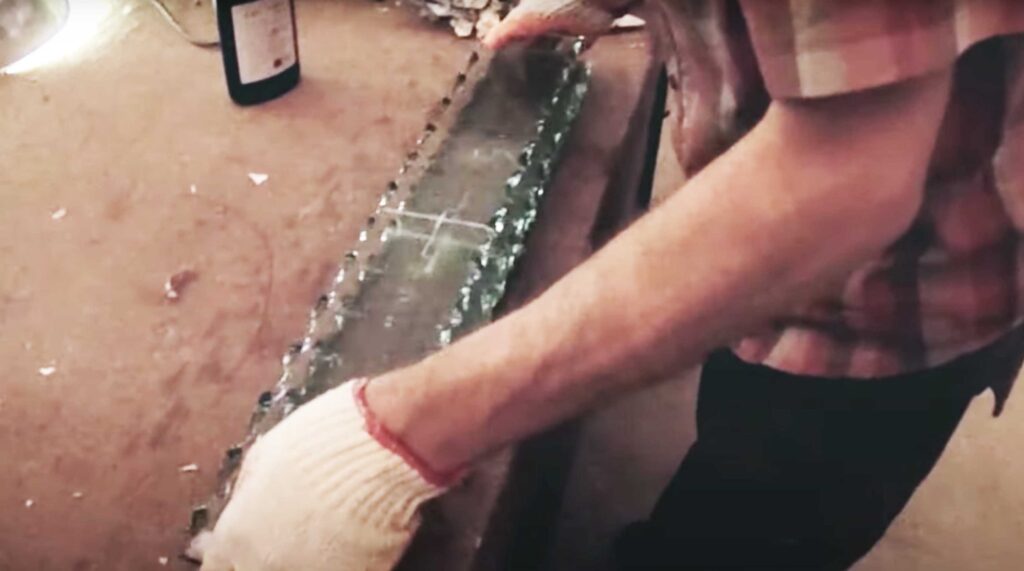
To finish the piece, the edges of the individual glass layers are expertly treated. This allows customized shapes and textures to be created while sharp edges are smoothed for safety and aesthetic refinement. Whether used as sophisticated wall decor or as a dynamic water feature, stacked glass creates a powerful and memorable visual impression.

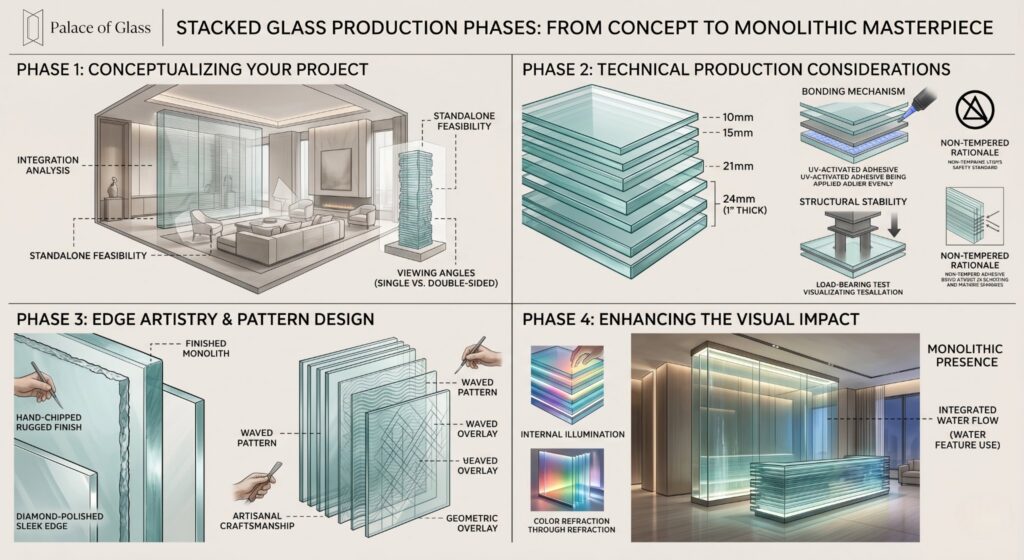
Phase 1: Conceptualizing Your Project
The first step in bringing your vision to life is determining the placement and structural role of the glass feature. Consider whether the stacked glass will be integrated into an existing wall or serve as a standalone, floor-mounted sculpture. When planning an installation near a wall or within a structural opening, it is important to finalize the overall dimensions and determine whether the glass will be viewed from one side or serve as a double-sided focal point.
Phase 2: Technical Production Considerations
- Glass Thickness: Standard layers typically range from approximately 10 mm to 20 mm (about 3/8″ to 3/4″), while thicker glass up to approximately 24 mm (1″) may be used to achieve a particular visual effect.
- Tempering Standards: For many stacked glass applications, the individual layers are not tempered. If a tempered layer were to fail due to internal pressure or stress, the entire layer could shatter into small fragments, potentially compromising the integrity of the monolithic structure. Laminated glass provides another form of safety glass for applications where it is appropriate.
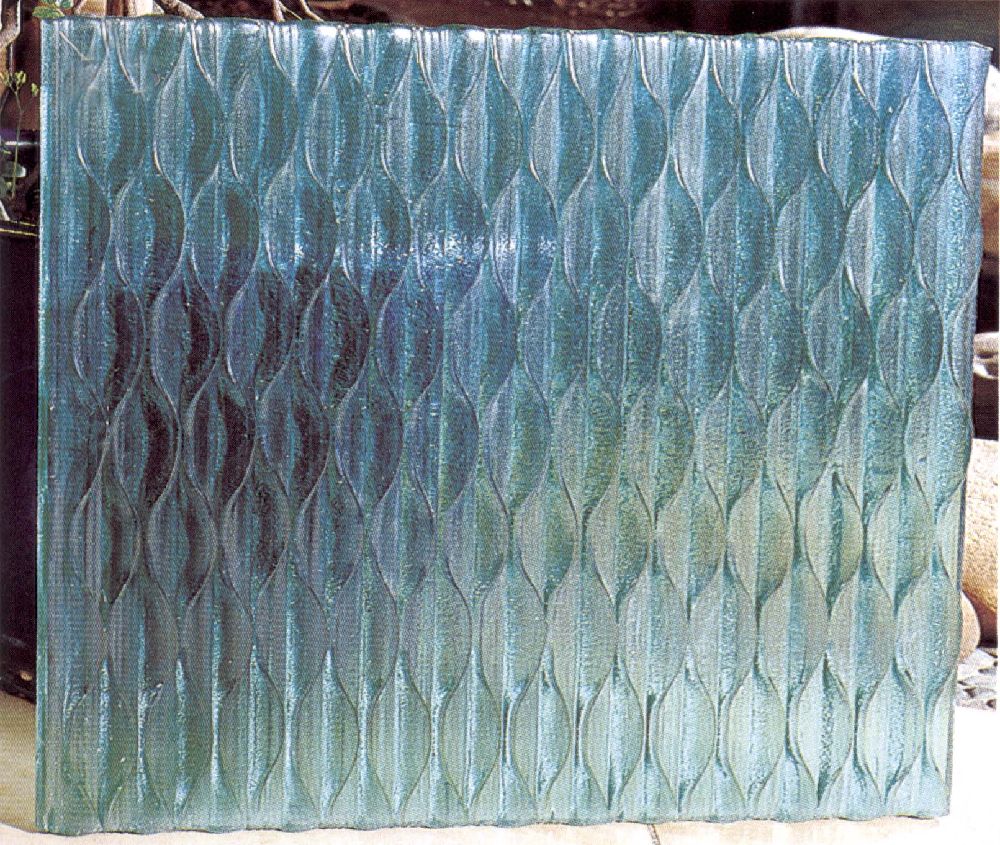
- Edge Artistry: Edges can be smooth, with each glass layer individually beveled, or arranged in overlapping patterns to create a more dramatic visual effect. Artisans can also create diverse surface textures, such as tapped or chipped glass edges that form rhythmic, wave-like patterns.
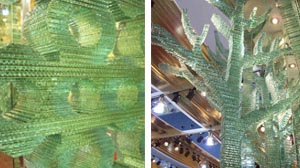
- Design Patterns: By carefully arranging layers in specific sequences, we can create intricate patterns and distinctive internal designs within stacked glass walls. Stacked glass can also become a dimensional architectural element or a sculptural feature within a larger design project.
Phase 3: Enhancing the Visual Impact
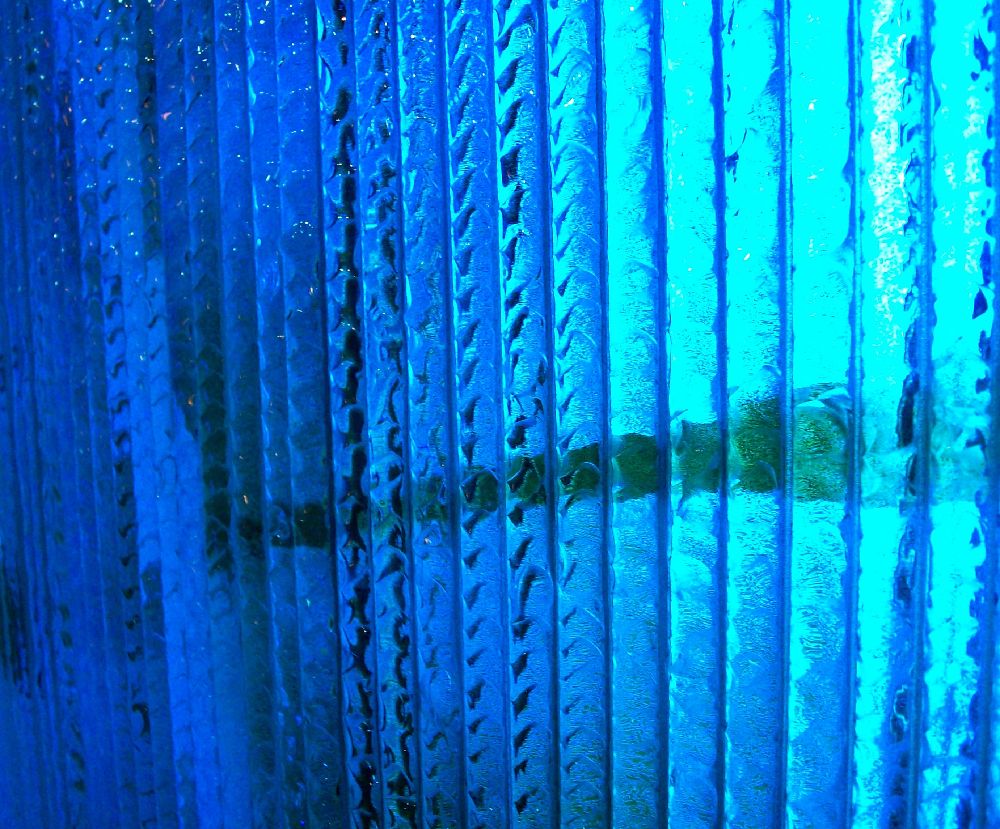
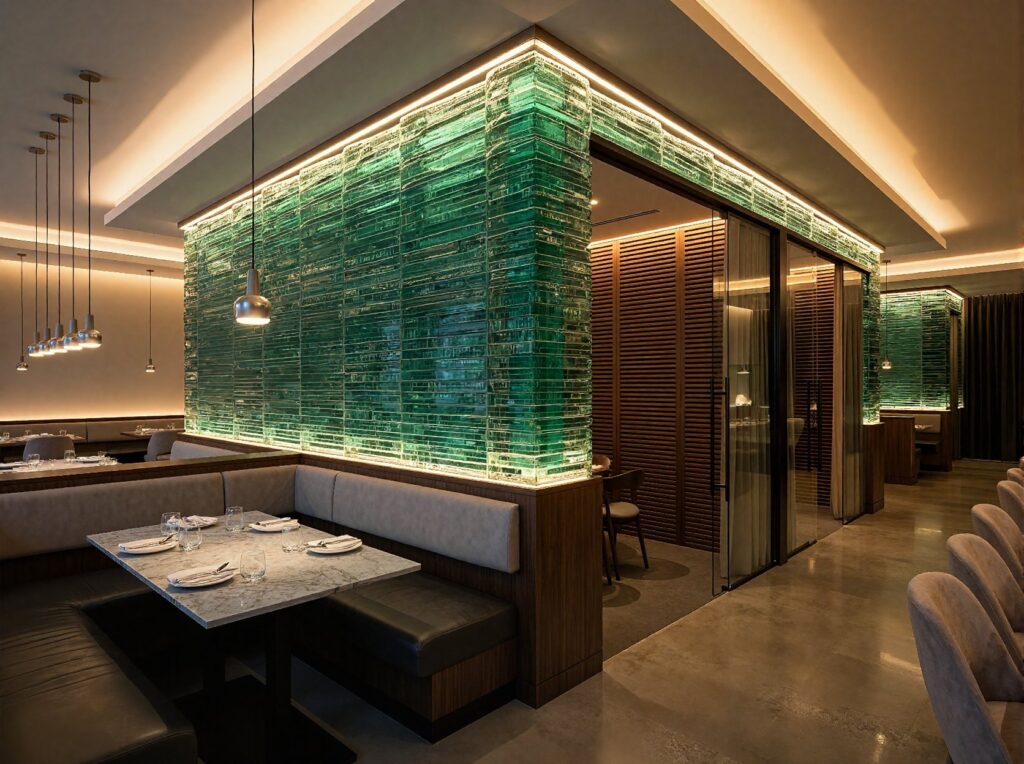
The transparent nature of stacked glass allows for extraordinary lighting and water effects. By integrating LED lighting or using the textured surface as part of a water feature, you can create high-impact design elements suitable for reception desks, partitions, monumental wall decor, and sculptural installations.
Custom Lighting Features
Additional lighting can be incorporated to create a customized feature and make the stacked glass a focal point of your design. Lighting fixtures can be integrated into the structure, while LED lighting can also be positioned along the sides or base of the glass. The transparent and refractive qualities of the material help distribute illumination throughout the stacked layers.
Logistics and Installation
Delivery and Assembly: Planning for Flawless Execution
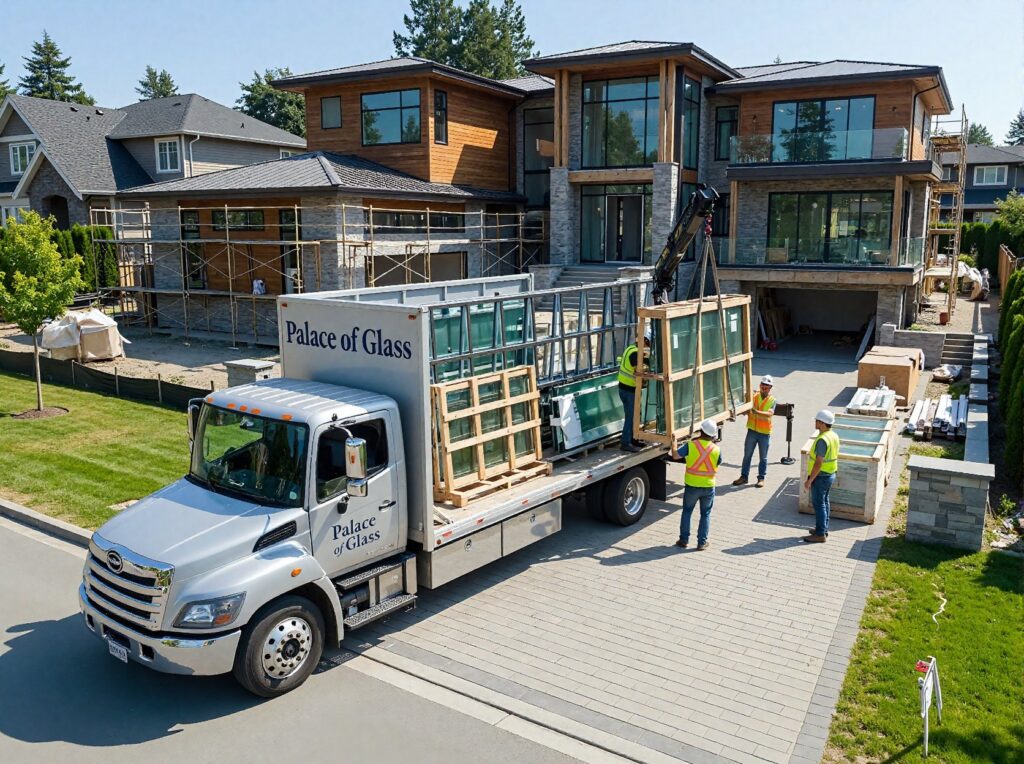
The logistical success of your stacked glass installation begins with a rigorous, collaborative planning process. The expert staff at Palace of Glass will work with your production and installation teams to evaluate transport requirements and determine the optimal weight and size of prefabricated segments that can be safely transported to their destination.
Expertise Required On Site
To ensure a successful glass assembly, it is important to have experienced professionals on site who are equipped for the unloading, unpacking, handling, and precise installation of heavy architectural glass products.

Seamless Integration and Modular Assembly
Because delivery and final installation are critical considerations for monumental stacked glass features, our production team can employ modular fabrication strategies where appropriate. Products can be created as partially assembled, manageable segments to reduce weight and complexity during transportation. These components can then be integrated into their final unified form by installation specialists once they are safely positioned on site.
Preparing for Installation
Because the final placement and bonding of stacked glass components may leave little room for adjustment, the installation procedure should be carefully planned and rehearsed in advance. With proper preparation, the assembly process becomes considerably more predictable and efficient.
Packaging and Transportation
Packing Procedures
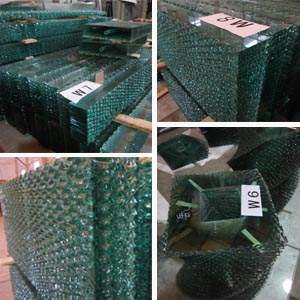
Palace of Glass has a dedicated department that packs glass products and prepares them for transportation. Glass surfaces are protected before being secured inside padded wooden crating, with additional protective and insulating materials used as required for safe shipment.

Crate Design
Wooden crates for architectural glass are commonly designed to keep glass components securely positioned during transportation. The crates are also designed with unloading in mind, allowing forklift operators and installation crews to move the products safely from the truck to the installation area.
FAQs
Horizontal vs. Vertical Stacking: Directing Light and Volume
The direction of the glass stack dramatically influences the visual weight and interaction with light in the finished piece. Horizontal stacking is the traditional approach, creating a powerful, grounded structure in which the deep edge refractions become a focal point. This orientation emphasizes the volume and solidity of the glass, giving the feature an appearance reminiscent of polished stone or geological strata.
By contrast, vertical stacking creates a sleeker, more contemporary aesthetic. Parallel glass edges rise through the installation, emphasizing height and producing different patterns of reflection and refraction. Both orientations offer distinctive ways to control surface texture, light, and the internal design of a custom stacked glass partition.

How is stacked glass made?
Stacked glass is made by cutting individual strips or layers of glass into the required shapes and bonding them together to create a unified architectural feature.
What are the applications of stacked glass?
Stacked glass can be used for decorative walls, water features, partition walls, reception desks, illuminated architectural elements, and sculptural installations.
How do you maintain stacked glass installations?
Stacked glass installations are relatively easy to maintain. Regular cleaning with an appropriate glass cleaner is usually sufficient. Cleaning requirements may vary depending on the surface texture and whether the installation incorporates water or other architectural elements.
Contact Us
For more information about incorporating stacked glass into your next project, contact us for a free 30-minute consultation. Our team of designers and craftsmen is here to guide you through the entire creative process.